Tshechu Festivals in Bhutan: How to Plan Your Trip Around a Festival
Masked dances, festival etiquette and tips for timing your Bhutan trip.
Few experiences in Bhutan stay with travellers like a tshechu. For a few days each year, the courtyard of a dzong or temple fills with colour, music and masked dancers, and whole communities come together in their finest clothes. If you would like to see a festival on your trip, here is what to expect and how to plan around one with Welcome Travels.
What is a tshechu?
Tshechu means "tenth day". These religious festivals are held in honour of Guru Rinpoche, who is said to have brought Buddhism to Bhutan, and many of them fall on or around the tenth day of a month in the Bhutanese lunar calendar. Almost every district celebrates its own tshechu, usually in the courtyard of its dzong or main temple.
For Bhutanese families, a tshechu is both a blessing and a reunion. People travel from nearby villages, bring picnic baskets, meet old friends and spend the day watching the dances together. Watching a festival is believed to bring merit, so it is a joyful and deeply meaningful day at the same time.
The masked dances
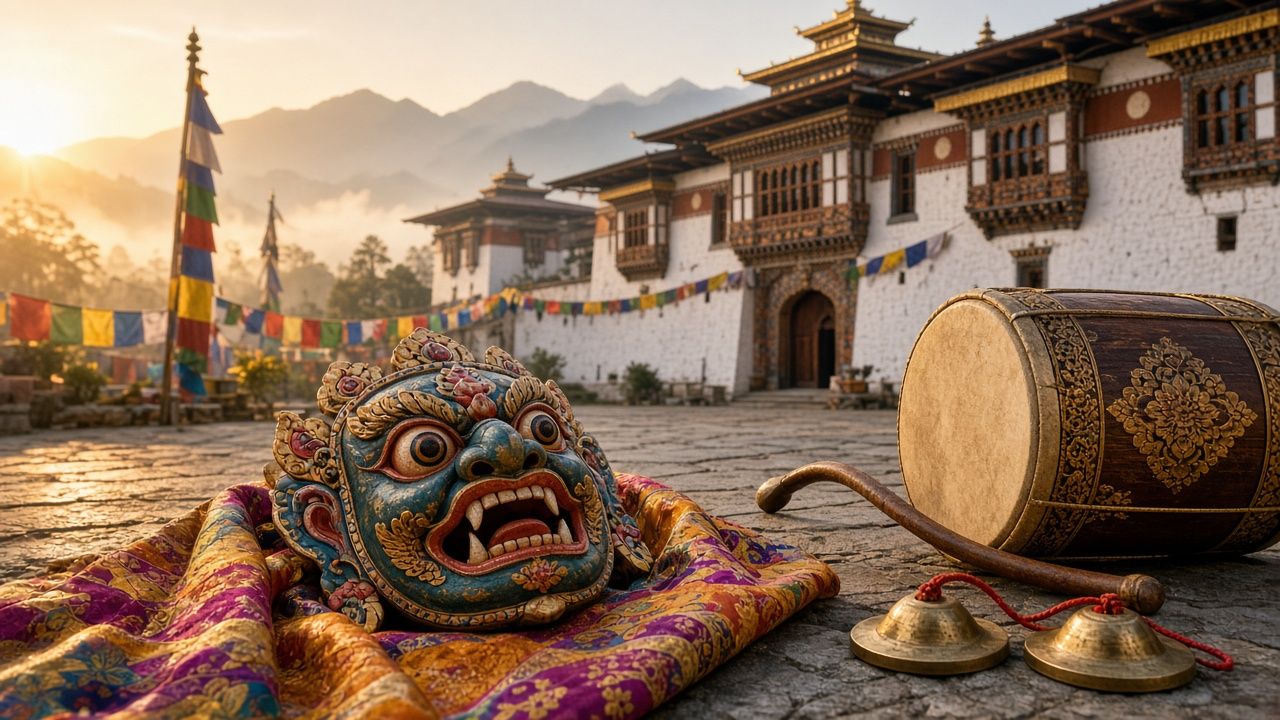
The heart of every tshechu is the cham, the sacred masked dances. Dancers in silk costumes and carved wooden masks spin and leap to the sound of drums, cymbals and long horns. Each dance tells a story, from the victory of good over evil to lessons about life, death and compassion.
Between the dances, keep an eye out for the atsaras, the masked clowns. They tease the crowd, joke with the dancers and keep everyone laughing, while also helping to keep order in the courtyard.
At some festivals, the final morning brings the unveiling of a thongdrel, a huge religious painting on cloth that is displayed before sunrise and rolled up again as the sun climbs. Seeing it is considered a special blessing, so it is well worth the early start.
Where you can see a festival
Two of the best-known festivals are close to the places most visitors already explore. The Thimphu Tshechu is held at Tashichho Dzong in the capital, and the Paro Tshechu takes place at the dzong in Paro, near the start of many itineraries. Our Classic Bhutan Experience already includes time in both Thimphu and Paro, so when your dates line up with a festival, we can shape the days around it.
Smaller village and temple festivals happen across the country through the year. They are often quieter and more intimate, and can be a lovely surprise when they fall during your trip.
Plan ahead: dates change every year
Because festivals follow the lunar calendar, their dates move from one year to the next. Please do not rely on last year's dates. When you contact us, tell us which months you are considering and we will check the confirmed festival dates for your travel year.
Festival periods are also some of the busiest times to visit, so hotels and flights fill up early. Trips are confirmed within about two weeks after the down payment, and this can take longer during peak season. If a festival is the highlight of your trip, it is best to start planning several months ahead.
Festival etiquette
- Dress respectfully. Long sleeves and long trousers or skirts are best. Many visitors enjoy wearing a gho or kira for the day, and your guide can help you arrange this.
- Remember it is a religious event. Keep your voice low, do not walk across the dance ground, and follow your guide's lead on where to sit or stand.
- Be thoughtful with your camera. Photography is usually allowed in the courtyard, but avoid flash, never block the view of local families, and ask before taking close-up photos of people.
- Arrive early and bring a hat, sunscreen, water and a light jacket. Mornings can be cold, and you may sit outside for several hours.
- Be patient. Dances can be long and the crowds large, but the atmosphere is part of the magic.
</ul><h2 class="text-2xl font-bold text-gray-900 mt-10 mb-6">No festival on your dates? You can still enjoy the culture</h2>
If your travel dates do not match a tshechu, you can still enjoy Bhutan's living culture. Our tours can include an evening cultural program with traditional music, dance and dinner, along with a cultural showcase where you can try archery, play khuru (the traditional darts game) and dress in Bhutanese attire.
Plan your festival trip with Welcome Travels
Whether you want to build a whole journey around the Thimphu or Paro Tshechu, or simply hope to catch a village festival along the way, our team can help you choose the right dates and itinerary. Explore our tours and send us an inquiry at [wel.cometobhutan.com](https://wel.cometobhutan.com), and we will help you plan a trip that fits your interests and the festival calendar.


