Zorig Chusum: Discovering Bhutan's Thirteen Traditional Crafts
See Bhutan's 13 traditional arts at Thimphu's Zorig Chusum institute.
Bhutan's dzongs and monasteries are breathtaking, but much of what makes them beautiful was made by hand: the painted beams, the carved windows, the statues and the woven textiles. The skills behind them are known as Zorig Chusum, the "Thirteen Crafts," and in Thimphu you can watch a new generation learning them. Here is what to expect from a visit to the National Institute for Zorig Chusum, and how to bring a piece of Bhutanese craft home with you.
What is Zorig Chusum?
Zorig Chusum literally translates to "Thirteen Crafts." Together they form the foundation of Bhutan's artistic and cultural heritage, and you will see their work everywhere you travel, from temple murals to carved and painted woodwork. The thirteen arts are:
- Lhazo: traditional painting
- Jinzo: sculpting
- Shagzo: wood carving
- Yigzo: calligraphy
- Dezo: paper making
- Lugzo: bronze casting
- Tshemazo: embroidery
- Thagzo: weaving
- Parzo: carpentry
- Dozo: masonry
- Tshazo: bamboo and cane weaving
- Trozo: gold and silver smithing
- Garzo: blacksmithing
- Thimphu: the Handicrafts Market and the shops around Clock Tower Square are good places to browse. On the cultural day of the Classic Bhutan Experience, the evening is free for a relaxed stroll through town and its handicraft shops.
- Paro: on the final days of our tours there is time to stroll Paro town, with its handicraft shops and cafés.
- Traditional dress: Bhutanese attire is elegant and can be bought locally. If you plan to wear it to a dzong, remember that men also need a ceremonial scarf and long socks. Your guide will help you get it right.
</ul><h2 class="text-2xl font-bold text-gray-900 mt-10 mb-6">Inside the National Institute for Zorig Chusum</h2>
The institute was established by the Royal Government of Bhutan in 1971 to preserve and promote these traditional arts in a modern context. It has campuses in Thimphu and Trashiyangtse, and the Thimphu campus is the one most visitors see.
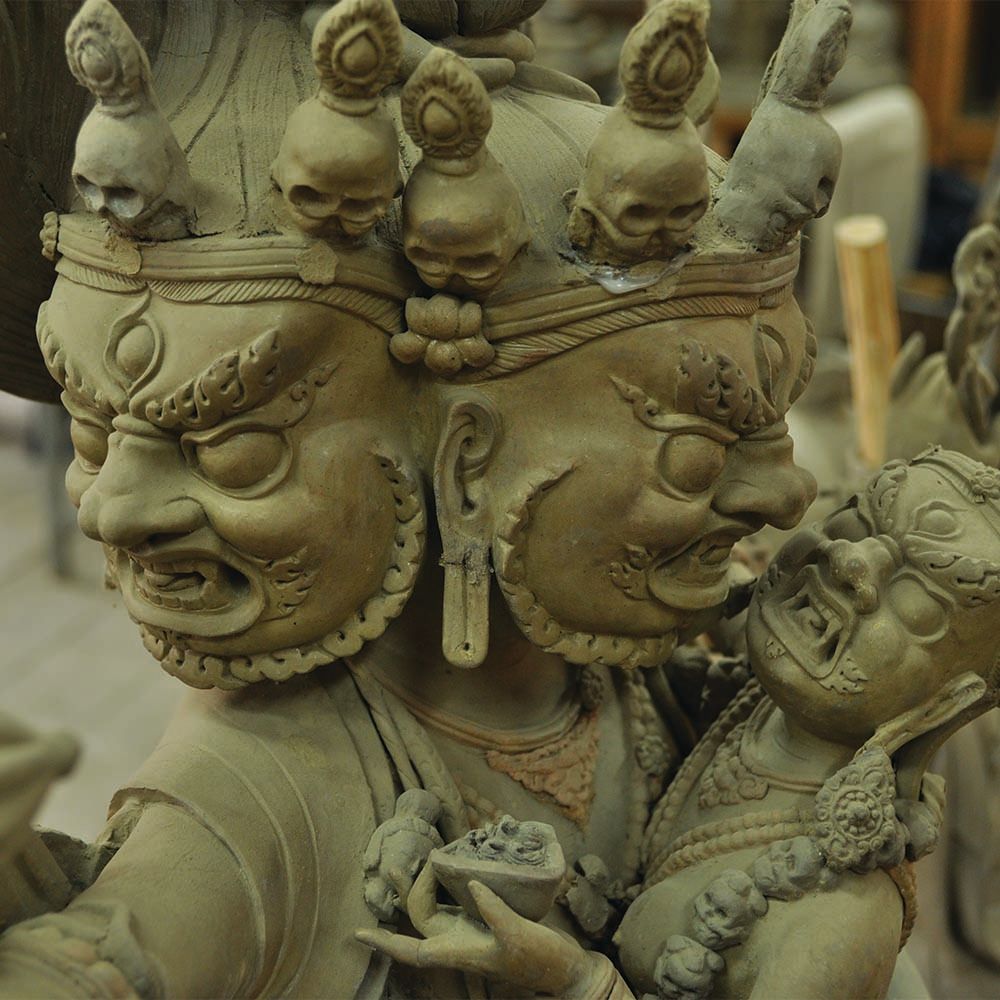
Students spend years in rigorous training, so a visit is a rare chance to watch skills that have been passed down for generations. Depending on the day, you might see the fine brushstrokes of a thangka painting, a wood carver shaping a panel, a sculptor finishing the face of a deity, or weavers working with brightly coloured threads. It is a living school rather than a museum, which is exactly what makes it special. Please be respectful of the students while they work, and ask your guide before taking photos.
A tip from our team: once you have seen how long a single carved panel or painted scroll takes to make, you will look at every dzong on the rest of your trip with new eyes.
Where it fits in your itinerary
On our <strong class="font-semibold">Classic Bhutan Experience (7 Nights / 8 Days)</strong>, day two in Thimphu includes a choice between the Institute for Zorig Chusum and the Textile Museum, alongside the Wangditse Monastery hike, the Motithang Takin Preserve, Buddha Dordenma and Tashichho Dzong. The institute is also among the places of interest on the <strong class="font-semibold">Classic Bhutan Experience – Short Escape (4 Nights / 5 Days)</strong>, which begins with a visit to Thimphu's Handicrafts Market and Clock Tower Square.
Every Welcome Travels trip is fully private, so if crafts are your passion, tell us. We can give you more time at the institute, or swap another stop for the Textile Museum. Your itinerary is a guide, not a rulebook.
Shopping for crafts and souvenirs
After seeing the crafts being made, many travellers want to take one home. Our itineraries leave time for this:
</ul>Ask your guide for advice on what you are looking at, whether it is a hand-woven textile, a painted scroll or a small carving. They are happy to explain the meaning behind the designs, which makes a souvenir far more memorable.
Plan your craft-filled journey
Bhutan's traditional arts are not hidden away in glass cases. They are still practised, taught and worn every day. If you would like a trip that leaves room for workshops, weaving and a little shopping, browse our [tours](https://wel.cometobhutan.com/tours), then [send us a booking request](https://wel.cometobhutan.com/booking) or [get in touch](https://wel.cometobhutan.com/contact). Our team will tailor the itinerary to your interests.